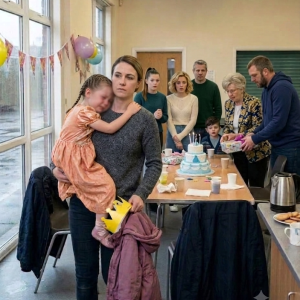
My 8-year-old daughter came home from school crying after a class assignment to draw their families. She had drawn four people—her mom, dad, brother, and a small figure with wings standing in the corner. Some of her classmates laughed, and one boy told her that the extra person wasn’t part of a real family. Hurt by their reactions, she put down her crayons and refused to finish the drawing.
A few days later, her teacher called me in and showed me the picture. Pointing to the small winged figure, she gently asked who it was. My throat tightened as I answered. It was my daughter’s baby sister, who had died from SIDS at just four months old. Though she had never truly known her, my daughter still carried her sister in her heart and considered her part of our family.
The following week, the teacher invited me back to the classroom. This time, every wall was covered with new family drawings. But something was different. Each student had added someone who was no longer physically present—a grandfather who had passed away, a beloved dog, an aunt, or another cherished person they missed and remembered.
The teacher told me she couldn’t stop thinking about my daughter’s drawing. It made her realize that children shouldn’t only be asked to draw what they can see, but also what they feel and remember. Because of that lesson, the classroom became a place where love, loss, and memory were all part of the story. And on that wall, among all the drawings, my daughter’s baby sister still remains—small, loved, and wearing her wings.