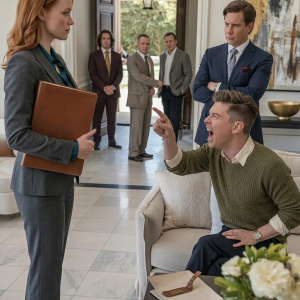
The venue owner explained that Amelia’s parents had spent the entire wedding day approving upgrades they assumed someone else would cover. They added a premium open bar, doubled the floral budget, extended the reception by three hours, and booked a fireworks display after dessert. When staff asked who would pay for the changes, Amelia’s father smiled and said, “Caleb’s mother owns a company. She’ll take care of it.”
I called Caleb that evening and asked him to come alone. When he arrived, I placed the original contract, the wire transfer receipt, and the itemized list of last-minute charges on the table between us. His face drained of color as he realized I had already paid for the venue months earlier. Then I handed him the small leather box containing his father’s watch. “I flew twelve hours to give you this,” I said quietly. “Instead, I was told I never mattered.”
For the first time since the wedding, my son stopped defending his wife. He admitted Amelia had insisted her side of the family handle the guest list and that he had assumed I chose not to attend. The moment he saw the security footage the venue owner sent—footage of me being turned away at the entrance—he buried his face in his hands. “Mom,” he whispered, “I didn’t know.”
I never paid the $81,500 bill. Caleb and Amelia’s families split every dollar of the extra charges themselves. Months later, Caleb called again—not to ask for money, but to apologize. Rebuilding trust took time, honesty, and difficult conversations. The watch eventually found its way onto his wrist, but only after he understood something his father had always known: being a parent is a lifetime of giving love, but being a son means knowing when to give some back