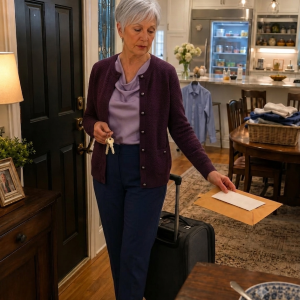
I carried the suitcase into my living room and set it on the table like it might break if I looked at it too fast. The leather was worn smooth at the edges, the kind of wear that only comes from years of being handled with care. My first thought was simple: Ezra had left me something sentimental, maybe letters or old photographs. Something to say thank you for groceries and Sunday visits that never felt like anything more than kindness at the time.
When I finally unlatched it, the first layer inside wasn’t what I expected at all. It was documents—neatly stacked, sealed, organized with almost obsessive precision. Property deeds. Bank statements. A will that looked recently updated. My name appeared more than once, each time attached to something I didn’t understand. And at the very bottom, a small envelope with my name written in Ezra’s familiar shaky handwriting.
My hands trembled as I opened the letter. He wrote that he had no children left to inherit what he built, no family who stayed close enough to matter. But he also wrote something that made my breath stop: he had been watching over me, too. Quietly helping with bills I never noticed, covering repairs when my car broke down, even paying off a debt I had almost forgotten about years ago. “You never asked for anything,” he wrote. “So I made sure you would never need to.”
Inside the envelope was the final document: Ezra had left me his house—and everything in it. Not as a gift of obligation, but as something he called “repayment for twelve years of Sundays.” I sat back, unable to move, staring at the empty space where a man I thought I was simply helping had, in truth, been quietly saving me right back.