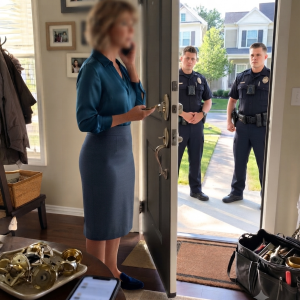
When the police stepped inside, Blair calmly handed them the property deed, mortgage documents, and proof that the house had been hers years before the marriage. Her lawyer explained that Edward had illegally forced the homeowner out of her own residence. The officers ordered Edward and his parents to gather their belongings immediately, warning that refusing to leave could result in trespassing charges. For the first time, Martha’s confidence disappeared.
As the locksmith replaced every lock, Edward pleaded for another chance, insisting it had all been a misunderstanding. Blair said nothing. Instead, she handed him divorce papers her lawyer had prepared that morning. Then came an even bigger surprise—her attorney revealed that Edward had secretly taken out loans using forged financial information, hoping Blair’s income would cover the debt. The police documented the evidence and opened a fraud investigation.
Within months, the divorce was finalized, and Edward faced legal consequences for both the fraudulent loans and unlawfully removing Blair from her own home. His parents, realizing too late that their son had deceived them as well, apologized sincerely. Blair accepted their apology but made it clear that forgiveness did not mean giving anyone another key to her house.
One year later, Blair stood on the same front porch, now filled with flowers instead of moving boxes. Looking at the new locks, she smiled, knowing she had protected more than a building—she had protected her dignity. She learned that family is never measured by who demands a place in your home, but by who respects the right to be welcomed into it.