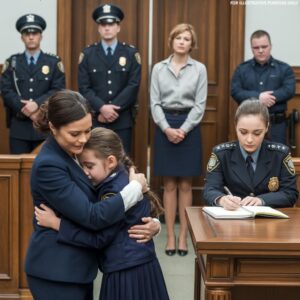
Some families have a golden child. Mine had Brooke—and then there was me, Lina, the one they only seemed to notice when they needed a comparison. I was twenty-six when they finally said out loud what I had felt my entire life. It happened over dinner while Brooke, glowing through a video call with her fiancé Evan, casually asked for $100,000 to help with a house in Marin County. My parents agreed without hesitation, calling it an “investment in her future.” When I questioned it, they turned on me with a cold clarity I had been bracing for since childhood. I had “accomplished nothing,” they said. Brooke had earned their support; I had not. In that moment, the unspoken truth of my life became undeniable—I was the failure daughter. So I stood up, walked out into the cold, and didn’t look back.
Growing up, the difference between us was never subtle. Brooke was their miracle—early milestones, varsity captain, UCLA graduate, the pride of every room. I was quieter, drawn to art, filling sketchbooks with things no one at home ever cared to notice. My achievements were tucked away while hers were displayed. When she turned sixteen, she got a brand-new car and a party filled with applause; I got a quiet dinner and a gift card. College made it worse. They paid for everything for Brooke, celebrating her future like it was guaranteed greatness. When I got into a solid state school with a strong art program, they refused to help, calling it a waste. I took out loans, worked multiple jobs, and survived on almost nothing, graduating with honors—alone. Even when I got seriously ill with pneumonia, they dismissed it as poor time management. The only person who showed up was Mrs. Parker, my old art teacher, who sent soup, money, and something my parents never did: care.
After that final dinner, I cut contact completely. No calls, no holidays, no hoping things would change. For the first time, I chose myself. I poured everything into building a life from scratch—working at a small design firm, taking freelance jobs, going to therapy, and slowly unlearning the belief that I was “less than.” It wasn’t easy, but it was real. I found friends who showed up, who celebrated me without comparison. I started painting again and even sold my work. Two years later, I was no longer just surviving—I was thriving in a small house I rented, building a life that finally felt like mine.
Then Brooke found me. She showed up unexpectedly, shocked to see what I had built without any help. For the first time, there was something different in her voice—something like respect. She said our parents needed to see this, needed to understand they were wrong. But I didn’t want them to. They had chosen not to see me when it mattered, and I wasn’t going to give them the chance to rewrite that history now. A week later, a letter arrived: a $100,000 check and a short note—“We were wrong. We hope this helps.” No apology, no acknowledgment, just money. I tore it up and sent a letter back. I didn’t need their investment now. I had needed their belief then. They couldn’t buy back what they had never given.
Five years have passed since then, and my life is full in ways I once thought impossible. I bought my house, grew my business, and now teach art to kids who remind me of who I used to be—quiet, overlooked, and full of untapped potential. I make sure they feel seen. I married Alex in a small backyard ceremony surrounded by people who chose me every day. My parents didn’t come. Brooke sent an apology, and I accepted it in silence. I don’t think about what might have been anymore. I think about what is—a family built on presence, love, and choice. I was never the failure they labeled me as. I was simply the daughter they didn’t know how to love. And now, I’m the woman who learned to love herself anyway. READ MORE BELOW