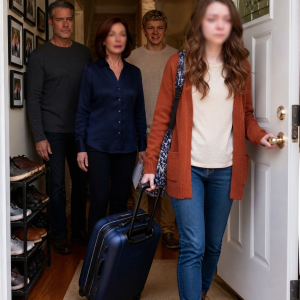
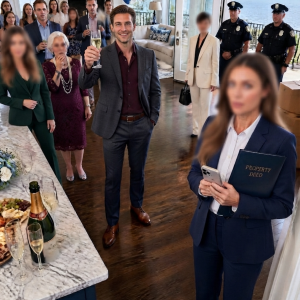
I traveled across the country to see my son, carrying gifts, memories, and hope carefully packed alongside my suitcase. For years, our relationship had lived in phone calls squeezed between his busy schedule and promises of visits that never quite happened. Still, when he finally said, “Pick a weekend,” I believed him. I arrived early, stood on his porch in a blue dress I had chosen just for that moment, and imagined stepping into a home where I belonged. But when he opened the door, he didn’t hug me—he asked me to wait outside. “Just fifteen minutes,” he said, before closing the red door in front of me, leaving me alone with the sound of laughter on the other side.
I waited at first, telling myself it was nothing. But as the minutes passed, something deeper settled in—this wasn’t about timing, it was about priority. I wasn’t early; I was inconvenient. The realization stung more than I expected. So I picked up my suitcase, walked away without a word, and checked into a nearby motel. That night, lying in a quiet, unfamiliar room, I thought about all the years of loving from a distance, of accepting less than I needed, and of mistaking “come anytime” for being truly wanted.
By morning, my phone was flooded with missed calls and messages. Among them was one that stood out: “Mom, please answer. It was for you.” When I finally picked up, my son’s voice was different—unsteady, stripped of the usual excuses. He admitted he had been so focused on making everything perfect that he forgot about the person it was all meant for. Then I heard my granddaughter’s small voice asking if I was still coming, and something inside me softened. I told him he could come get me—but only if things would truly change.
When he arrived, standing in the rain without an umbrella, I saw the effort I had been waiting for. My granddaughter handed me a drawing of a house with me placed right in the center, labeled “WELCOME GRANDMA.” Inside their home, I found something unexpected—photographs from my old albums framed alongside their own, as if I had always been part of their everyday life. I cried, not out of sadness, but because for the first time in a long while, I felt seen. We talked honestly that night, not to fix everything instantly, but to begin again with something real.
The next morning, I stood in front of that same red door. This time, my son opened it wide and simply said, “Come in, Mom.” And I did—but not because everything was suddenly perfect. I walked in because I saw the difference between being invited and being wanted. Healing, I realized, isn’t built on one grand gesture, but on consistent effort, honest moments, and small daily choices. As I sat at the kitchen table watching my grandchildren laugh over pancakes, I understood that we still had a long way to go—but for the first time, we were finally moving in the same direction.