The diamond on my sister Amanda’s finger caught the chandelier light as she stood at the head of our parents’ dining table, performing her engagement like it was a staged event meant for applause. She spoke about Riverside Gardens, the wedding venue she had chosen, describing two hundred guests, an exclusive guest list, and connections that had secured her a date most people waited years for. My daughter Emma, eight years old and full of hope, asked if she could be a flower girl, while my son James quietly watched, already sensing the answer before it came. Amanda’s smile tightened as she dismissed Emma with a polite but cutting “we’ll see,” and my mother quickly stepped in to explain that the wedding was “sophisticated,” meaning my children didn’t fit the image Amanda was trying to build. Even in that moment, I saw it clearly: my children weren’t being considered as family, but as inconveniences to be managed.
What no one at that table understood was that Riverside Gardens—the venue Amanda spoke about with such pride—was mine. Years earlier, after my divorce, I had quietly bought the abandoned estate at auction when everyone believed I was barely getting by. While my family pitied my “struggles,” I rebuilt it piece by piece, learning contracts, managing renovations, and turning it into one of the most sought-after wedding venues in the state. It was owned through an LLC, my name hidden from public listings, with bookings handled only through my planner Sophie. To my family, I was surviving; in reality, I was building an empire they never thought to look for.
Weeks later, Amanda invited me to lunch and told me directly that my children “weren’t worthy” of attending her wedding. She spoke about aesthetics, cost, and image, as if Emma and James were logistical problems rather than human beings. She even questioned whether I could dress them appropriately, unaware she was speaking to the woman who owned the very venue she was paying over two hundred thousand dollars to rent. I left the restaurant calmly, told Sophie to continue taking bookings as normal, and decided not to reveal the truth immediately. Instead, I watched as Amanda’s wedding plans escalated publicly—social media posts, luxury fittings, and rehearsals—all while I remained invisible in her narrative.
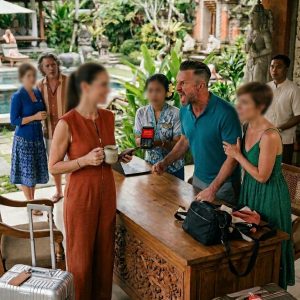
The day I finally revealed the truth came during a formal walkthrough at Riverside Gardens. Amanda, her fiancé Marcus, my mother, and their planner stood in the ballroom discussing layouts when I walked in with Sophie. At first, I was dismissed as staff until Sophie calmly introduced me as the owner. The room froze when I confirmed it myself. I showed them contracts, guest lists, and messages—especially the ones where Amanda explicitly excluded my children. In that moment, her entire version of reality collapsed. Marcus tried to recover, offering last-minute apologies and invitations, but I made it clear: this wasn’t about adding my children back in, it was about the assumption that they could be erased in the first place. They had mistaken my silence for powerlessness.
On the day of the wedding, I arrived with Emma and James and sat them in the front row marked “Hale Family,” watching as my sister walked into the same venue she had once believed I could never afford, let alone own. She saw us there and understood everything without a word needing to be spoken. After the ceremony, she broke down in the garden, apologizing to my daughter directly for calling her unworthy. I told her the truth was simple: worth isn’t assigned by guest lists or social status, and my children were never the problem. In the months that followed, she began slowly rebuilding her relationship with them, not through grand gestures, but through accountability and consistency. And as I watched my children sit safely in their own sense of value, I understood that the real victory wasn’t the reveal—it was raising kids who would never doubt they belonged anywhere in the world.