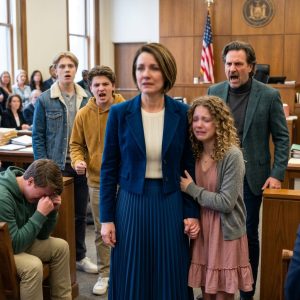
My father pulled out his phone like he was settling an argument once and for all. “Fine. Let’s see how independent you really are.” Within minutes, my phone lit up with alerts—cards locked, access cut off, permissions changed. He had always had access from years ago, when I was younger and trusted that “family help” came without conditions. I had meant to remove him. I kept delaying it. That delay became irreversible in seconds. My mother stepped into the mudroom, took my purse, emptied it carefully, and returned only my ID and forty-three dollars. “Out,” she said. My father opened the door. “Come back when you’re ready to apologize.” When I turned for shoes, my mother stopped me. “Leave them.”
That night, I walked out barefoot into the quiet street outside our house near Dallas. It wasn’t dramatic in the way people imagine—it was cold, simple, and final. I didn’t have a plan beyond getting through the next hour. I ended up in a 24-hour coworking space where I sometimes worked, curled on a vinyl couch under fluorescent light, trying to process how quickly someone can lose stability while still having unread messages from the people who just erased it. By morning, the tone from my parents shifted—first control, then irritation. “You’ve made your point. Come home,” my mother texted. My father called it drama. I didn’t respond.
Instead, I reached out to someone they had always dismissed—my former professor, Eleanor Voss. She didn’t hesitate. “Come downtown. Bring your documents,” she said. Within hours, I was in her office, barefoot and exhausted, explaining everything. She introduced me to her husband, Martin Voss, who ran a design firm. He looked at my work, not my situation, and said it was senior-level thinking. By the end of the meeting, I was offered a paid contract and temporary housing in a gated community. Not charity—structure, stability, and work. I accepted that same day.
When my parents found out where I was, they came expecting collapse. Instead, they found a secured property list—and my name on it. I saw them first through the gate camera. For the first time, I said, “No entry.” When I stepped out to meet them, I wasn’t barefoot anymore. My mother’s eyes went straight to my shoes. “What is this?” she asked. “An address,” I said. My father demanded I get in the car. My mother tried shame instead—talking about reputation, embarrassment, what people would think. I reminded her they had thrown me out without shoes. When they asked who was paying for my life now, I said, “I am.”
The moment Martin appeared beside me, everything changed. They didn’t argue after that. They didn’t push. They understood what mattered wasn’t just distance—it was that I was no longer dependent on them. They left without apology, without resolution. And standing there behind the gate they couldn’t cross, I understood something clearly: they hadn’t taught me independence by forcing me out. They had only revealed that I was never safe staying.