She didn’t mean to stay. That was the truth she admitted to me much later, sitting at our table as the evening light softened the walls around us. She had planned only to rest, to gather strength, to move on. But then I sat beside her with food I didn’t need and asked her name like it mattered. And I came back the next day. And the next. Somewhere in that quiet persistence, something changed. What she found wasn’t just safety—it was a life that asked nothing from her except that she stay.
She feared losing that more than anything. Not the money, not the past, but this—what we had built together without pretense. She worried that if I knew everything, I would see her differently. That I would feel deceived. That the simplicity of us would collapse under the weight of who she had once been. But when she looked at her hands, worn from work, marked by years beside me, she said the only truth that mattered: she felt like my wife. And I understood then that what she had hidden wasn’t who she was—but what had been taken from her.
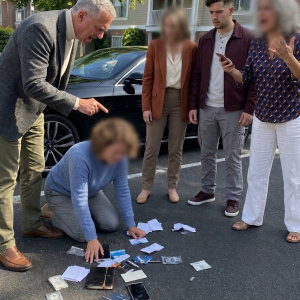
When her past finally arrived at our gate, it came in polished shoes and black cars and unfinished apologies. Her mother stood there, carrying years of regret, unsure if she had the right to step forward. And Claire, after everything, didn’t turn away. The pain between them was real, but so was the bond that refused to disappear. I watched as that distance slowly closed—not with grand gestures, but with quiet acknowledgments of truth, of failure, of love that had endured even when it had faltered.
In the end, nothing that mattered was taken from us. Not the life we built, not the way we chose each other every day. The world she came from returned piece by piece—through lawyers, through documents, through long conversations in unfamiliar rooms—but we did not leave this place behind. We grew instead. The house expanded, the garden deepened, and the life we had made with nothing became something stronger than anything we could have inherited. And when I think back to that first morning—the cold wind, the extra bread, the woman who believed she had nothing—I know this: not for a single moment would I choose differently.